

Investing in the “Green Industry” is often marketed as a win-win for both your wallet and the planet.
However, the reality of Sustainable Investing (often called ESG—Environmental, Social, and Governance) is much more complex.
Here is a breakdown of why a “green” investment doesn’t always lead to a “green” outcome.
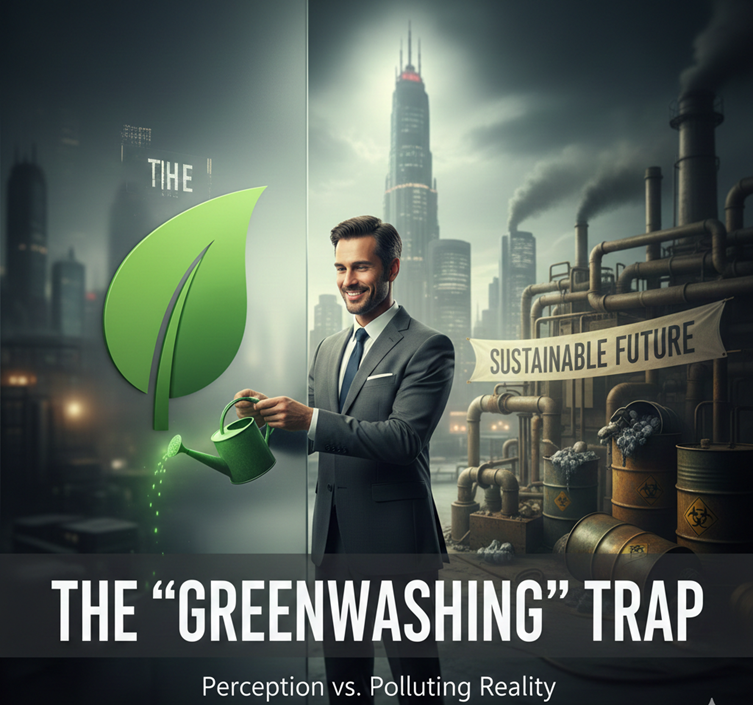
1. The “Greenwashing” Trap
The most common hurdle is Greenwashing, where companies spend more time and money marketing themselves as environmentally friendly than actually minimizing their environmental impact.
- Vague Labels: A fund might be labelled “Sustainable,” but when you look at the fine print, it may still hold shares in traditional oil companies that have a small “renewable energy” side project.
- The Problem: Investors think they are supporting a transition, but their capital is actually sustaining “business as usual.”
2. The High Carbon Footprint of “Clean” Tech
Many green technologies require a massive amount of carbon-intensive resources to build. This is known as embodied carbon.
- Example: Electric vehicle (EV) batteries require lithium, cobalt, and nickel. Mining these minerals is an energy-intensive process that often causes local ecological destruction and high CO2 emissions during the initial production phase.
- The Reality: A “green” product may take years of operation before it actually offsets the carbon footprint created during its manufacturing.
3. The Rebound Effect
Sometimes, improving efficiency doesn’t actually reduce total consumption; it just makes the activity cheaper, leading people to do it more.
- In Practice: If a shipping company switches to more fuel-efficient “green” engines, the cost of shipping drops. As a result, global demand for shipping increases, and the total emissions might stay the same or even rise. This is known in economics as Jevons’ Paradox.
4. Rating Inconsistency
Unlike credit ratings, which are fairly standardized, ESG ratings are highly subjective.
- Conflicting Scores: One rating agency might give a company a “Triple-A” green rating because of its corporate recycling program, while another agency gives it a “D” because of its massive water usage.
| Green Investment | Perception | Possible Reality |
| Solar Panels | Purely clean energy. | High chemical waste during manufacturing. |
| ESG Funds | No fossil fuel exposure | Often contains “best-in-class” oil companies. |
| Electric Vehicles | Zero emissions. | Heavy environmental toll from mineral mining. |
The Result: Investors may rely on data that doesn’t accurately reflect the company’s true environmental impact.
https://www.energy.gov/topics/advancing-innovation-technology-transitions-and-early-investments
